
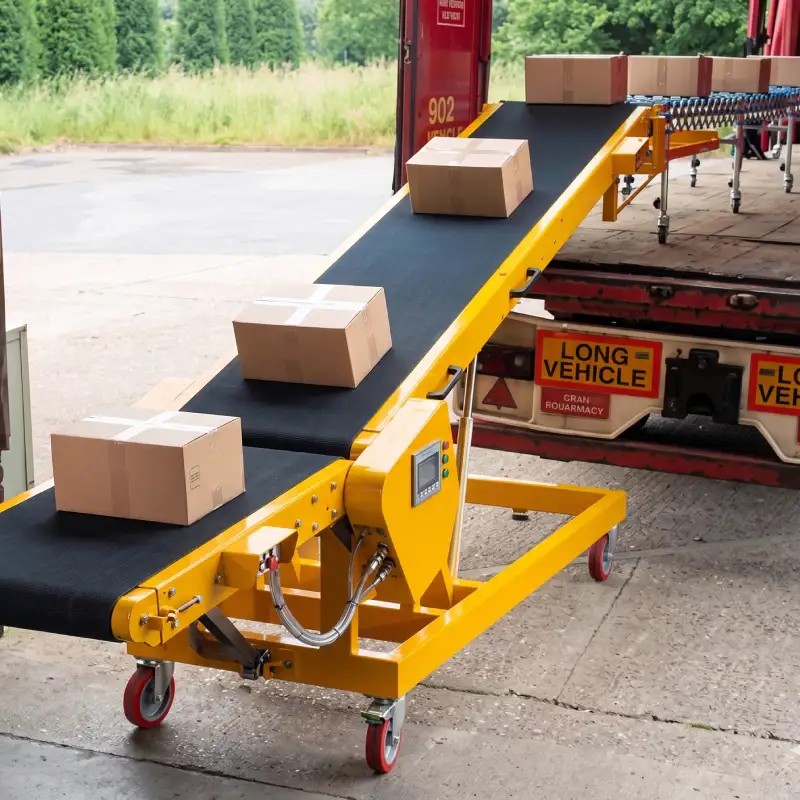
The Evolution of Smart Conveyors
The material handling sector is undergoing a massive digital transformation. Traditional passive conveyor belts are rapidly evolving into intelligent, data-driven systems integrated with Industrial Internet of Things (IIoT) sensors and AI software.
Predictive Maintenance via IIoT
Modern conveyor systems feature integrated thermal and acoustic sensors. These devices constantly monitor motor temperature, bearing vibration, and belt tension. By feeding this live data into predictive analytics algorithms, companies can forecast the exact operational hour a part will fail, executing maintenance during scheduled downtime.
Energy-Efficient Motor Systems
Smart conveyors now employ advanced variable frequency drives (VFDs) and motorized rollers that dynamically slow down or completely stop individual sections when no items are approaching. This significantly scales down factory carbon footprints and slashes power utility bills.
Modular and Automated Sorting
Automation requires flexibility. Modern modular plastic belts and multi-directional roller matrices allow rapid, high-speed sorting of complex packages without relying on mechanical pusher arms, drastically lowering the risk of product damage.
Conclusion
Embracing intelligent automation ensures your warehouse or manufacturing facility remains competitive, agile, and cost-effective in an increasingly demanding market.